
SCCSHA Fall 2026 Newsletter


Table of Contents
President's Corner

Kathy Bulman CCC-SLP
SCCSHA President 2026–2027
Dear SCCSHA Community,
Those of you in the school settings are most likely getting into the new school year routine and seeing students by now. It is heartwarming to see the growth previous students have made and the maturity levels that are happening since they left in June. Many of you may be starting initials as well since there are students with delays in their receptive/expressive language. Wherever you are with your caseloads, I hope the new school year is off to a good start. Those of you in private practice are also probably just as busy as you have been all year. I know that many people look forward to decorating for fall and love the cooler weather.
During the 2025/26 fiscal year, our professional development workshops focused on Artificial Intelligence in Speech-Language Pathology, Smart Tools, Safe Minds: Technology and the SLP’s Responsibility/Exploring the Neuroscience of Hearing and Music for Speech-Langauge Pathologists, Trauma-Informed Care for SLPs Working with Individuals, Supervision and Management for SLPs through a Trauma Informed Lens, and Assess, Don’t Guess: A Practical Playbook for AAC evaluations. We were happy to see many new faces at our May luncheon after we advertised on social media. Thank you all for your support. Without each of you, we could not continue the work we are doing.
The speakers for our upcoming fall workshop are Angie Neal discussing All Things "R" and Marcella McCollum discussing Legal Considerations and Eligibility Determination for Multilingual Learners. Please join us on October 23, 2026 for a virtual session from the comfort of your home or your office. We hope this information will help your students meet their goals for some of those difficult sounds to master, or will offer help when navigating assessments and reports for multilingual learners.
Just a friendly reminder that if you become a SCCSHA member, you will also receive a 20% discount on all of our workshops this year. This includes our virtual Fall Workshop, virtual Winter Workshop in January 2027 and our Spring Luncheon in May 2027. Membership and workshop tickets can be purchased through our website www.sccsha.org.
We continue to have open positions available on our board. Please reach out if you are interested in getting involved and making an impact on our profession and community. We have a great team and would love to get candidates for the open positions. At the moment, we are in need of a Vice President, a Treasury Secretary, a Student Representative, and a Community Outreach Chair who is willing to put out the newsletters.
Legislative Corner

Ann England, M.A., CCC-SLP-L
Legislative Liaison
Senate Bill 1288: CDE Guidance on AI in California Schools
California Department of Education (CDE) has released new guidance and a comprehensive Model AI Policy developed pursuant to Senate Bill 1288 (Becker, 2024).
Released on June 25, 2026, the Model AI Policy provides local educational agencies (LEAs) with a customizable template for governing AI use in classrooms, operations, and student learning. While not mandatory, the policy offers a detailed roadmap for safe, ethical, and legally compliant AI integration.
Link to CDE Guidance Document:
“Guidance for the Safe and Effective Use of Artificial Intelligence in California Public Schools: Learning About AI to Learn with AI”
State Of California Continues to Dedicate Funds to Scale Up Universal Design for Learning (UDL) In California Schools
Speech-Language Pathologists are recognized as integral members of the educational team to ensure the implementation of UDL principles with fidelity for their students with disabilities.
ASHA states, “SLPs address literacy as well as oral and written language; therefore, SLPs support UDL by providing unique insights for classroom teachers on how a student can demonstrate knowledge during assessments and lesson planning.
In partnership with students, educational audiologists and SLPs build students’ self-advocacy skills related to communication and support the effective use of technology so that all students can engage and learn in school.” (See link below to read ASHA guidance on website)
The California Department of Education (CDE) and the California Collaborative for Educational Excellence (CCEE) have dedicated targeted state funding to scale Universal Design for Learning (UDL) to build an equitable, inclusive, and cohesive school system in California.
Therefore, it is essential and advisable for SLPs to build their capacity about UDL through targeted professional development so they can effectively strengthen their expertise in UDL design to better partner with teachers and support access and improved student outcomes.
RESOURCES ON UDL AND UDL GUIDELINES 3.0
Special Edge Newsletter that describes CDE and CCEE UDL efforts:
Free Webinars and modules from Supporting Innovative Practices (SIP) featuring Nicole Tucker Smith and Lessoncast:
Open Access: Learning and Participation for All:
The UDL Guidelines at CAST:
What is UDL 3 In a Nutshell (2 min. video) by Nicole Tucker Smith, video on YouTube:
UDL and UDL 3.0 (8 min. video) by Katie Novak: https://www.youtube.com/watch?v=T3Pp3WrXJzQ
ASHA: UDL an Overview:
RESOURCES ON ASSISTIVE TECHNOLOGY:
Open Access: Learning and Participation for All:
The California Department of Education provides an extensive list of assistive technology tools organized by the skill the tool is supporting: https://www.cde.ca.gov/sp/se/atexmpl.asp
Vanderbilt University’s Iris Center offers a thorough introduction to the use of assistive technology in the classroom:
The California Department of Rehabilitative Services features extensive information on assistive technology, including information on how to find an IT advocate, how to access an IT lending library, and the work of the Assistive
Technology Advisory Committee:
Fall Workshop
Join us on Friday, October 23, 2026 for our virtual Fall Workshop.
We have two dynamic sessions:
1. Beyond the Scores: Legal Considerations and Eligibility Determination for Multilingual Learners
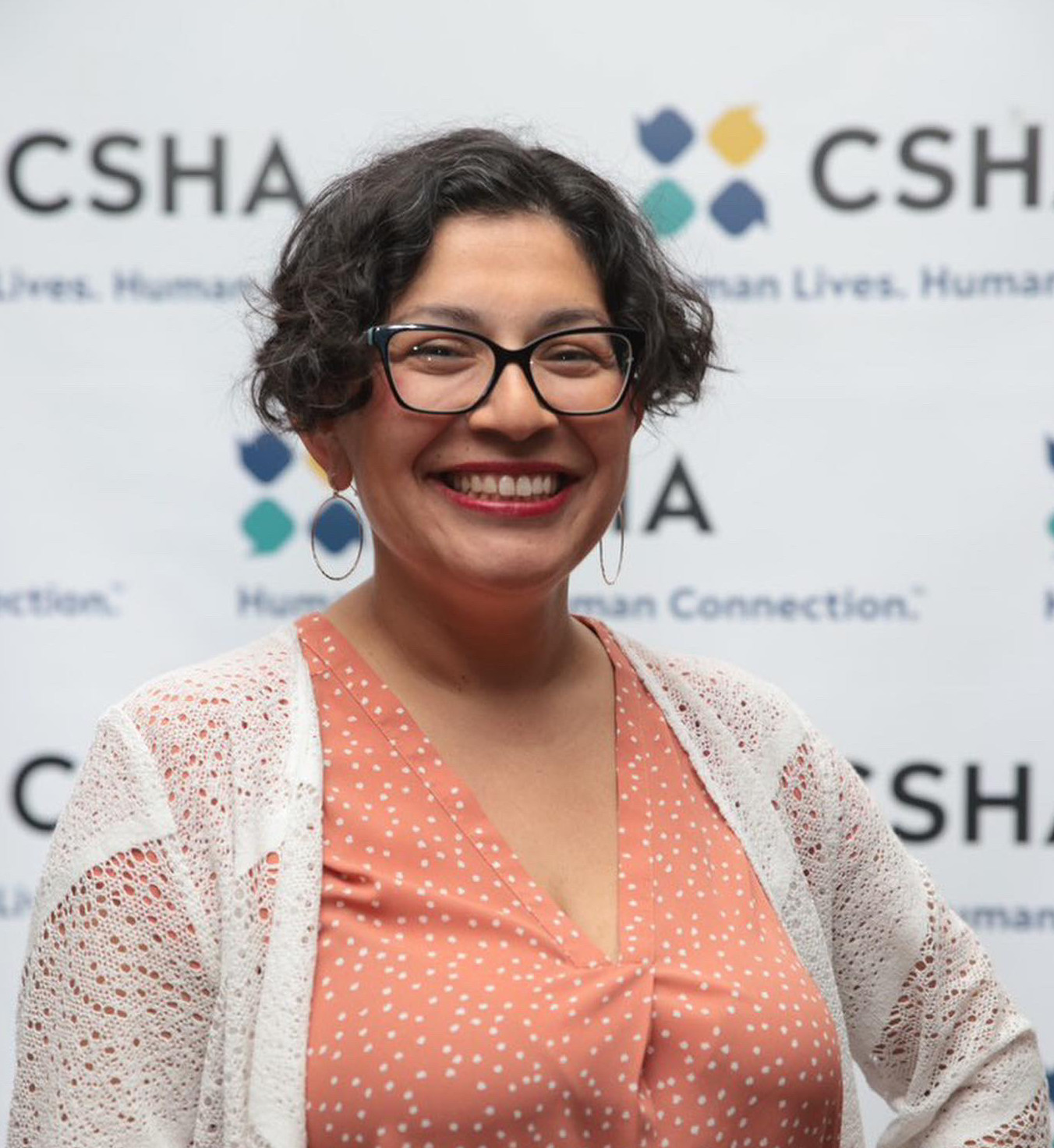
Presenter: Dr. Marcella Cardoza McCollum (she/her/ella) is a bilingual speech-language pathologist, undergraduate program coordinator, and assistant professor at San José State University. For 20 years, Marcella has focused on equitable services for diverse populations by developing guidelines, providing training at the local, state, national, and international level, and mentoring students and professionals. She works to increase the diversity in graduate school, and ensuring the students at all levels have access to culturally sustaining and strong educational opportunities. She has worked in university clinics, hospitals, public schools, and private practice settings.
Multilingual learners are far too often evaluated within a system built for monolingual students, then defended with paperwork that names scores rather than valid data. This session works from the regulatory floor, up through the assessment plan, to eligibility, all the while relying on IDEA and California Code of Regulations. Participants will learn to identify evidence that distinguishes language difference from language disorder, document when a standardized measure is invalid for a given student, and write reports that state their reasoning plainly and clearly rather than asserting it in a single template line.
2. All Things "R"
Presenter: Angie Neal is the Policy Advisor for Speech-Language Services at the SC State Department of Education. She is also president of the State Education Agency Communication Disability Council (SEACDC) and previous board member with the SC International Dyslexia Association (SC-IDA). Angie has been the recipient of awards for contributions to schools by associations for both school psychology and speech-language pathology in addition to having served as an adjunct professor and publishing a variety of books and journal articles.

All things "r" will provide SLPs with a comprehensive understanding of the current evidence related to Speech Sound Disorders with a specific focus on "r" and ways to make therapy for "r" engaging, efficient, and effective.


Comments